Daycare and Preschool Services Near Indio and Palm Desert, CA From a Home Where Your Baby Is Not Just a Number
Our Family Childcare Services
Quick Answers for Parents in a Hurry
It usually starts on a Sunday night.
The dishes are done, the kids are finally asleep, and one parent turns to the other and says the thing they have been putting off all week: "I go back to work in three weeks. Who is going to watch her?"
Then comes the phone. Then comes the search. "Daycare near me." "Child care Indio." "Preschool Palm Desert." Twenty tabs open. Six voicemails left. Two waitlists that are eleven months long.
If that is your Sunday night, take a breath. You are in the right place.
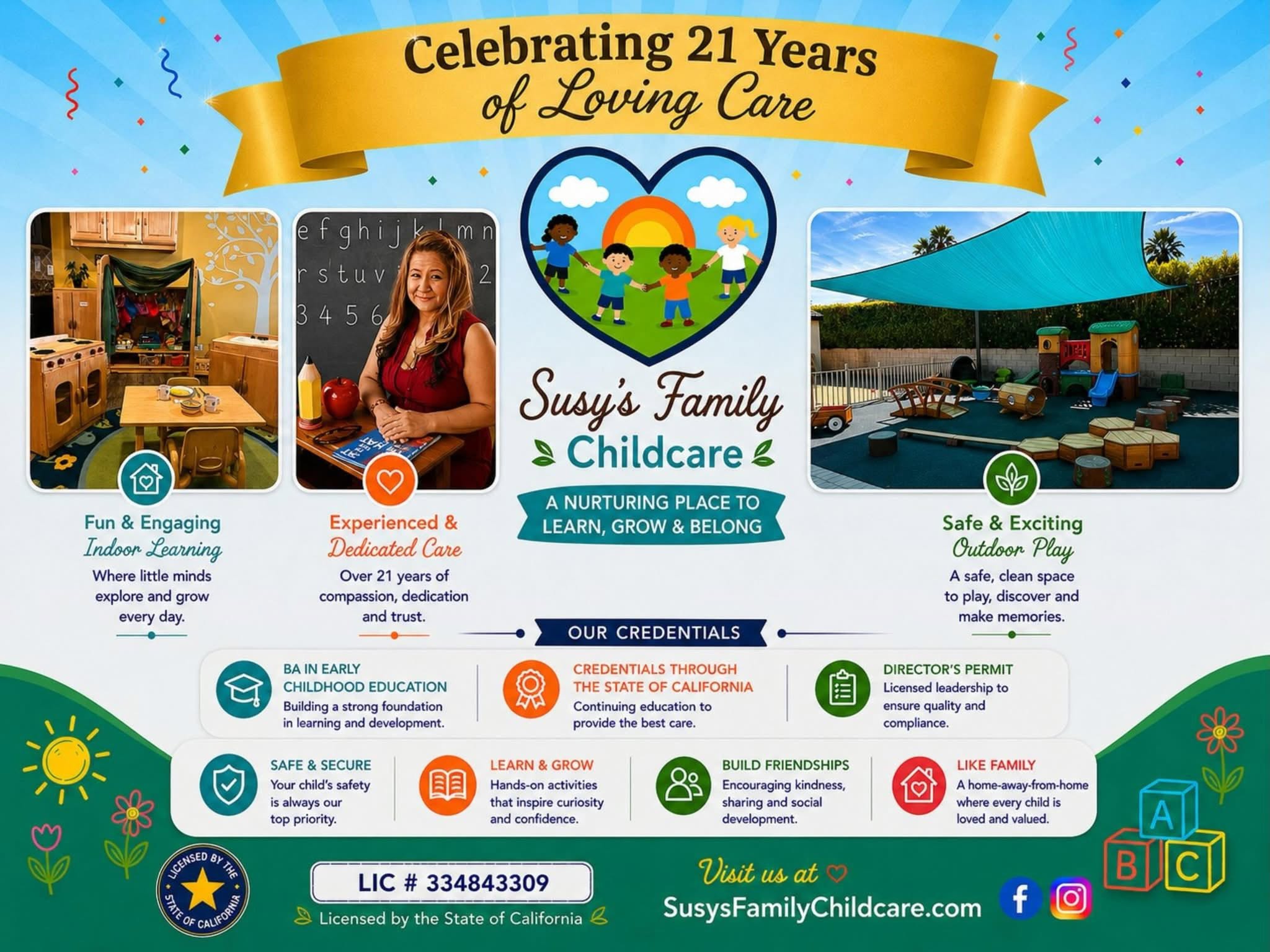
Susy's Family Childcare offers licensed daycare and preschool services near Indio and Palm Desert, CA for families all over the Coachella Valley. We are a family day care home, not a big center. That means small groups, the same familiar faces every morning, and a teacher who knows the difference between your son's tired cry and his hungry cry by the second week.
This page walks through every program we run, who each one fits, and how parents drive over from palm desert, Indio, La Quinta, and Coachella actually use our services.
Some of you are reading this in a parking lot on your lunch break. Here are the short answers first.
Where are you? We serve families near Indio and Palm Desert, close to the Monroe Street and Jackson Street corridors, minutes from Highway 111 and I-10.
What ages do you take? Infants through Transitional Kindergarten age. Roughly 6 weeks to 5 years.
Do you take subsidy? Yes. We accept RCOE, CalWORKs, and GAIN subsidized care.
Do you speak Spanish? Yes. We run a bilingual program (EN-ES) every single day. Hablamos español.
Can I visit first? Yes, and you should. Never sign up for daycare and preschool services you have not walked through with your own two feet.
Do you have space right now? Call and ask. Openings move fast in August and again in January.
What are Families Say About Us
Family Day Care Services That Feel Like a Second Home
Family Day Care Services
Here is the honest difference between a family day care home and a big commercial center, because most parents do not learn it until year two.
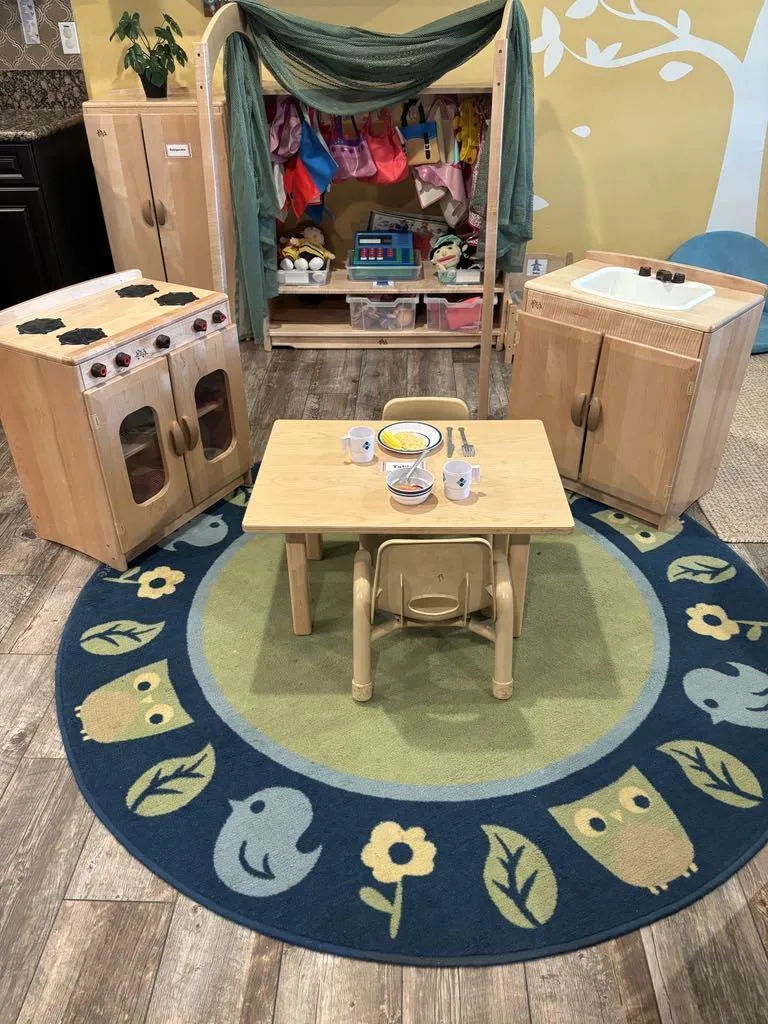
A family day care home is licensed by the State of California to care for children inside a real house. Real kitchen. Real backyard. Real living room where the reading corner sits by the window. The group is small on purpose. Your child is not moved to a new classroom and a new teacher every four months.
Our family day care services are built around one idea: young children learn best when they feel safe, and they feel safe when the same person greets them every morning.
That matters more in the desert than people think. Families out here work hard, and they work odd hours. We have parents in hospitality at the resorts in Palm Desert, nurses at JFK Memorial, field supervisors in the ag fields south of Indio, teachers in Desert Sands, and small business owners on El Paseo. Their schedules are not nine to five. Our daycare and preschool services are built for real desert work schedules, not office brochure schedules.
Day Care Center Quality With Home Day Care Warmth
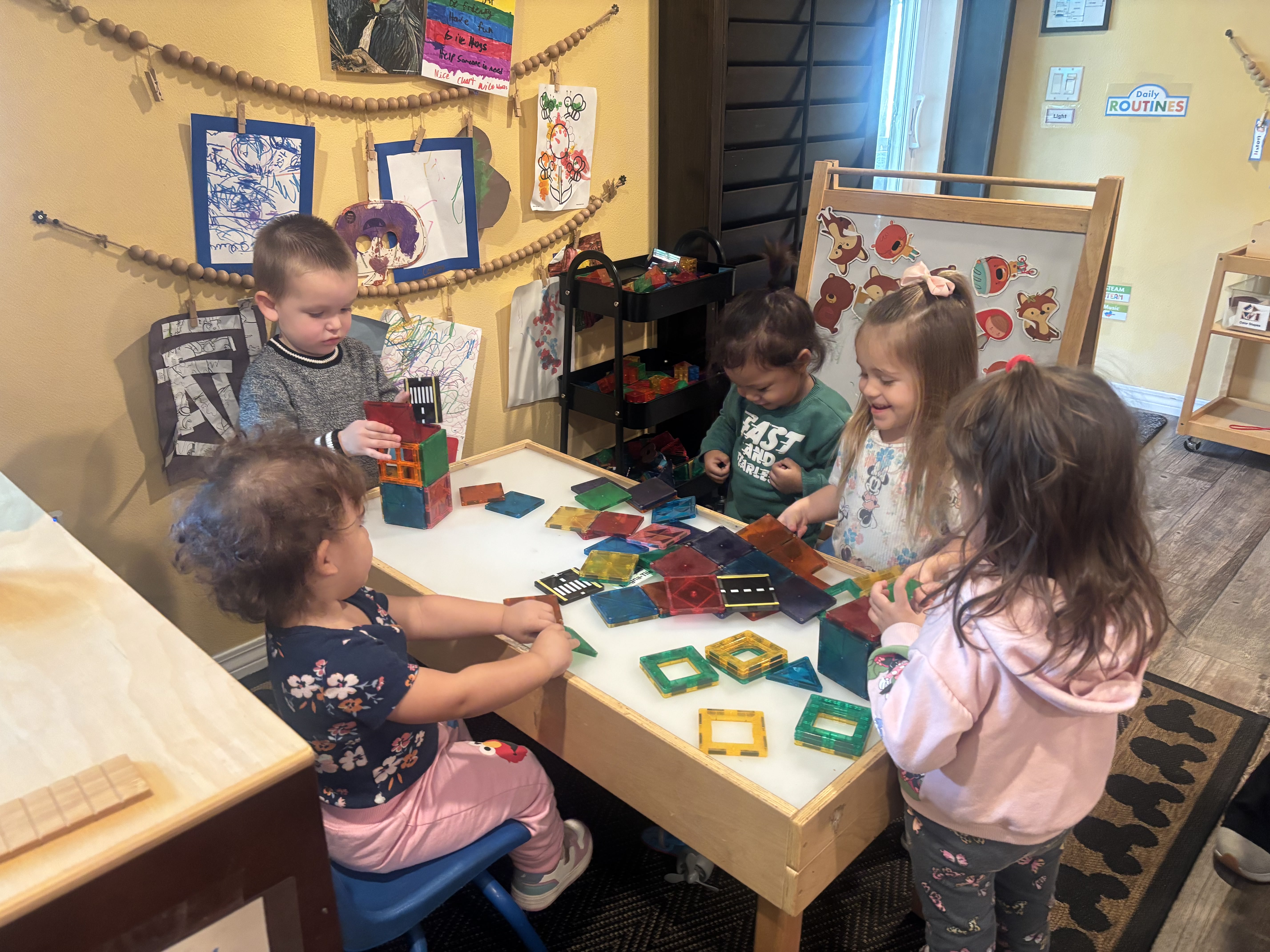
Parents often type "day care center Indio" into their phone because that is the phrase everyone knows. Then they tour a big center, see the long hallway and the twenty-four toddlers in one room, and feel their stomach drop.
We give you the structure people expect from a day care center. Daily schedule. Learning goals. Safety checks. Written reports. Licensed care with real oversight.
What we do differently is the size. A day care center runs on volume. We run on relationships.
A normal day here looks like this:
8:00 a.m. — Arrival, Music & Movement
8:30 a.m. — breakfast,
9:00 a.m. - Outdoor play in the shaded backyard, before the heat climb
10:30 a.m. -Snack
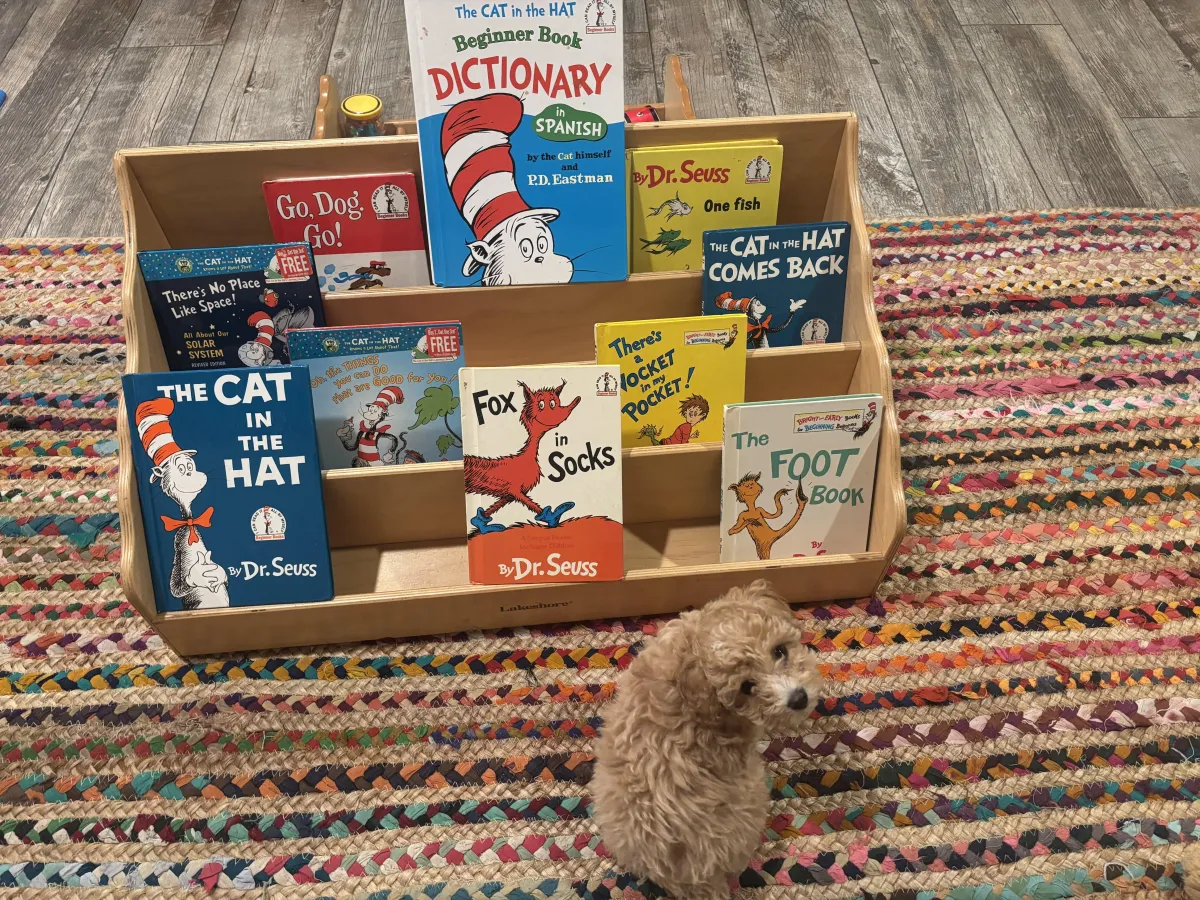
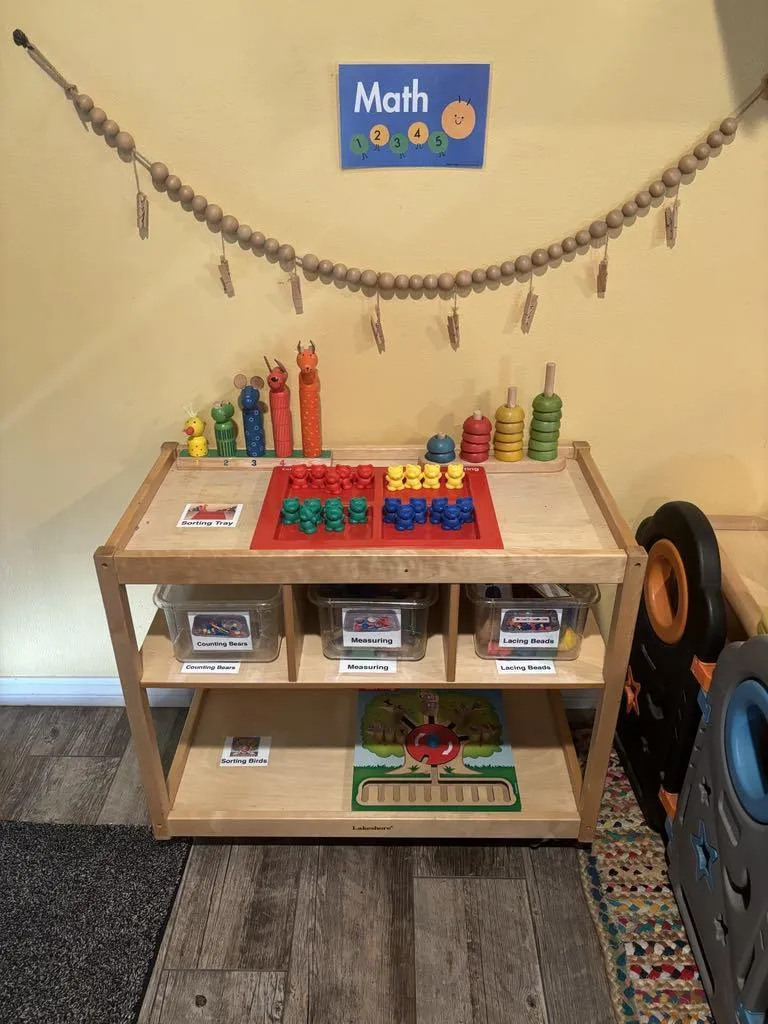
10:50 a.m. -Project time, stations, art, sensory play, Learning centers: letters, numbers, sorting, building, Story time,
12:00 p.m. — Home-cooked lunch at the table, together
12:30 p.m. — Brushing teeth, wash hands, Music & Movement
1:00 p.m. — Nap time
2:30 p.m. — Reading Time, Free choice
3:15 p.m. — Start picking ups, Pickup, daily report, and the two-minute chat that tells you everything
4:00 p.m. — Doors Closed
That schedule is not on a poster in the hallway. It is what actually happens
Child Care Agency Support: Help With RCOE, CalWORKs, and GAIN Subsidized Care
Let us talk about money, because a lot of families stop searching for daycare and preschool services the second they see a weekly rate.
Riverside County has real help available. Many working parents qualify and never find out. If you are enrolled in CalWORKs, working with GAIN, in school, or under the income limits, your child care may be paid for in part or in full.
We work as a child care agency partner with those programs. That means:
We accept RCOE / CalWORKs / GAIN subsidized care.
We help you understand what paperwork the county needs.
We sign what needs signing and submit attendance the way the county wants it.
We do not treat subsidy families any differently than private-pay families, not for one minute
If you do not know whether you qualify, ask us anyway. We have sat at the kitchen table with plenty of moms from Indio and Coachella who assumed they made too much, and it turned out they did not.
Preschool Learning That Gets Kids Ready for Kindergarten
Around age three, the question changes. It stops being "who will keep my child safe" and becomes "will my child be ready?"
That is fair. Kindergarten in Desert Sands and Coachella Valley Unified moves fast now. Kids are expected to walk in already knowing letters, sounds, their name in print, and how to sit for a lesson without melting down.
Our preschool program builds that, one small step at a time.
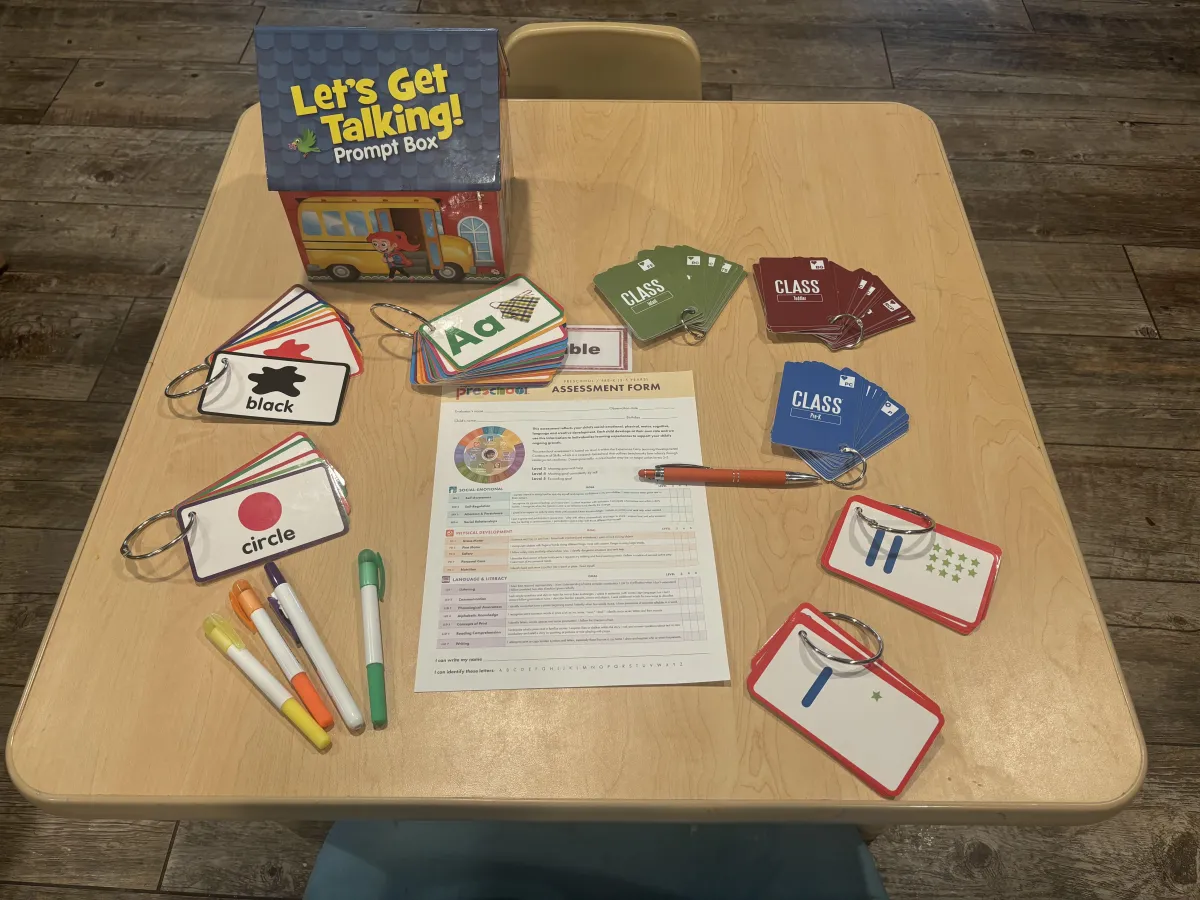
Pre-K Classes cover letter recognition and letter sounds, counting and number sense to 20, patterns and shapes, name writing, scissor and pencil grip, and the social skills that teachers say matter most: raising a hand, taking turns, cleaning up, asking for help with words instead of tears.
School Readiness Assessments happen twice a year. We sit down with you, show you exactly where your child is strong and where they need more practice, and give you three simple things to work on at home. No jargon. No scary charts. Just a plan.
School Readiness Assessments happen twice a year. We sit down with you, show you exactly where your child is strong and where they need more practice, and give you three simple things to work on at home. No jargon. No scary charts. Just a plan.
Transitional Kindergarten (TK) Program support is for kids whose birthdays land in that awkward window. If your child turns five between September and June, TK may be an option, and the rules have changed a lot in the last few years. We help you figure out the timing and keep your child working at TK level so they are not starting cold.
Educational Institution Standards Without the Institution Feeling
The phrase "educational institution" sounds cold. Fair enough. But it points at something real: are the people teaching your child actually trained, and is anyone checking?
Yes, and yes.
We hold a California family child care license. That brings unannounced inspections, background clearances through Live Scan, health and immunization records for every child, and posted emergency plans.
Safety, Licensing & CPR/First Aid is not a marketing bullet here. Staff hold current pediatric CPR and First Aid certification. We run fire drills. We do daily safety walks of the yard, which in this valley means checking for scorpions, ants, and anything the wind blew in overnight. Gates get checked every morning. Cleaning products live locked up, high, out of reach.
Low Child-to-Teacher Ratio is the quiet reason everything else works. When an adult has a small number of children, that adult can actually teach. They notice the toddler who stopped babbling. They notice the four-year-old who cannot hear the difference between "b" and "d." Small ratios catch things early, and early is everything.
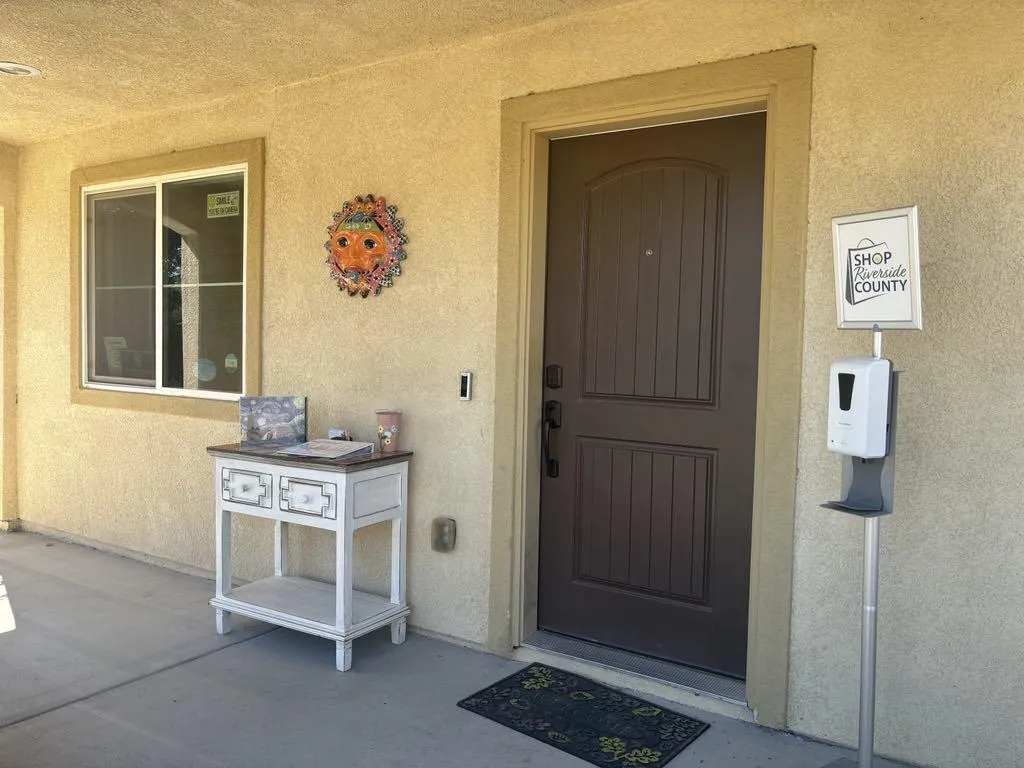
The Little School House Feeling: Play-based
Parents ask about screens more than almost anything else now.
Our answer is simple. Play-based / Screen-free Learning means no tablets, no propped-up phones, and no TV running in the background to fill time.
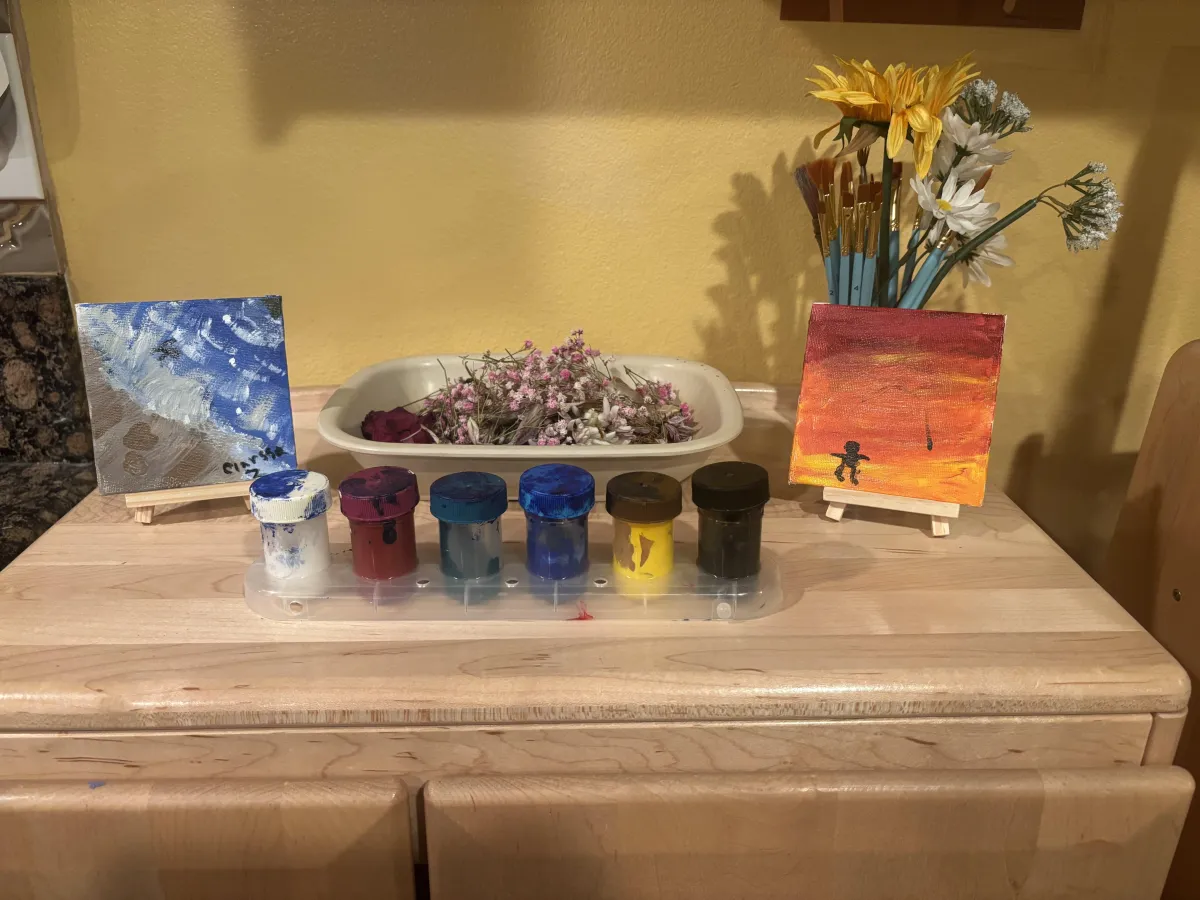
Children here learn through blocks, water, sand, dough, paint, dress-up, books, songs, and each other. That is not us being old-fashioned. That is how brains under five actually build.
A child stacking cups is doing math. A child arguing over who gets the red truck and working it out is doing social studies. A child singing the same silly song forty times is building the sound awareness that reading is made of.
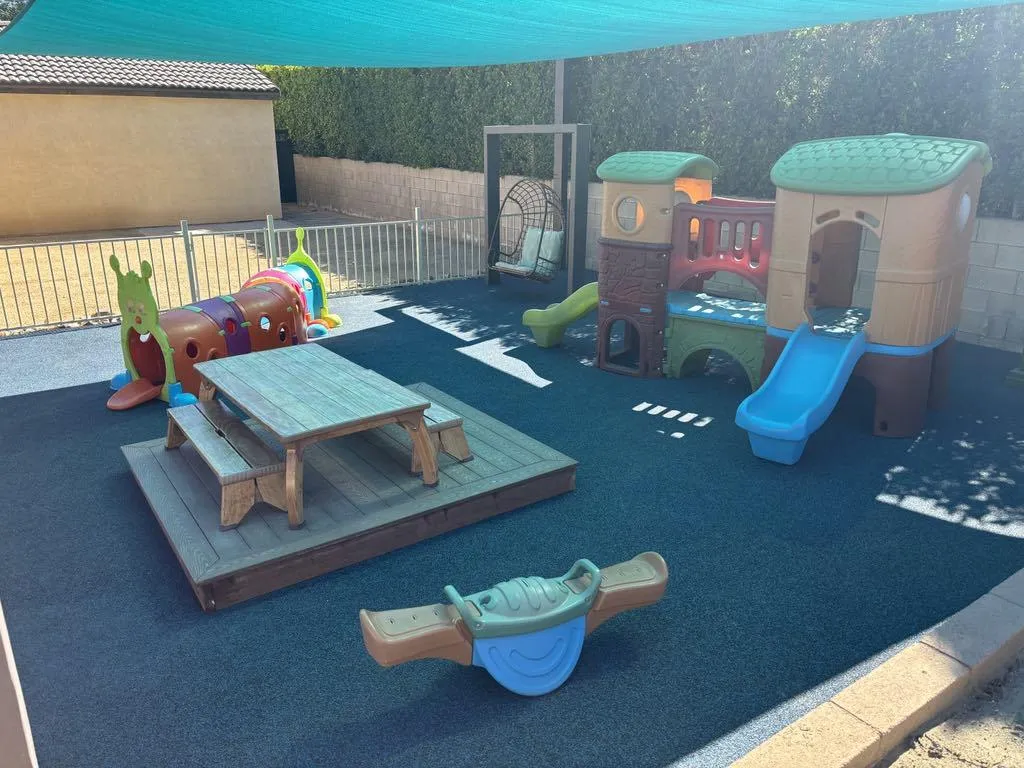
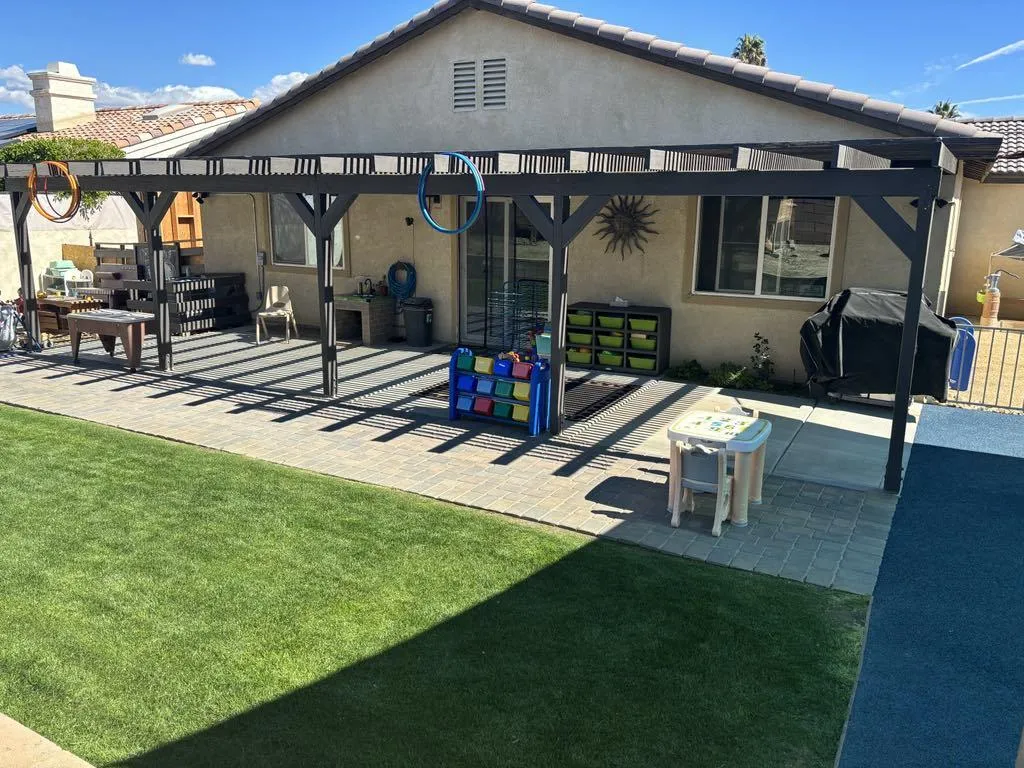
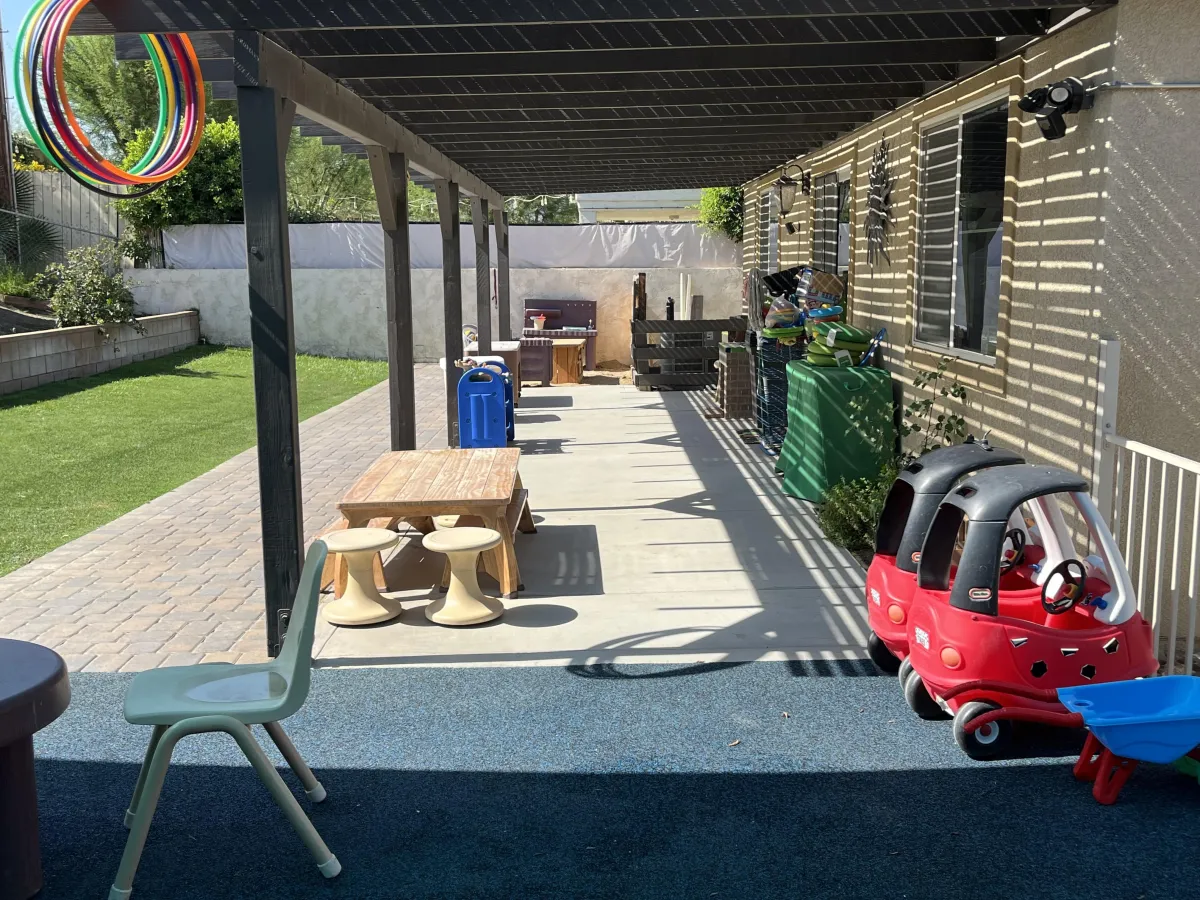
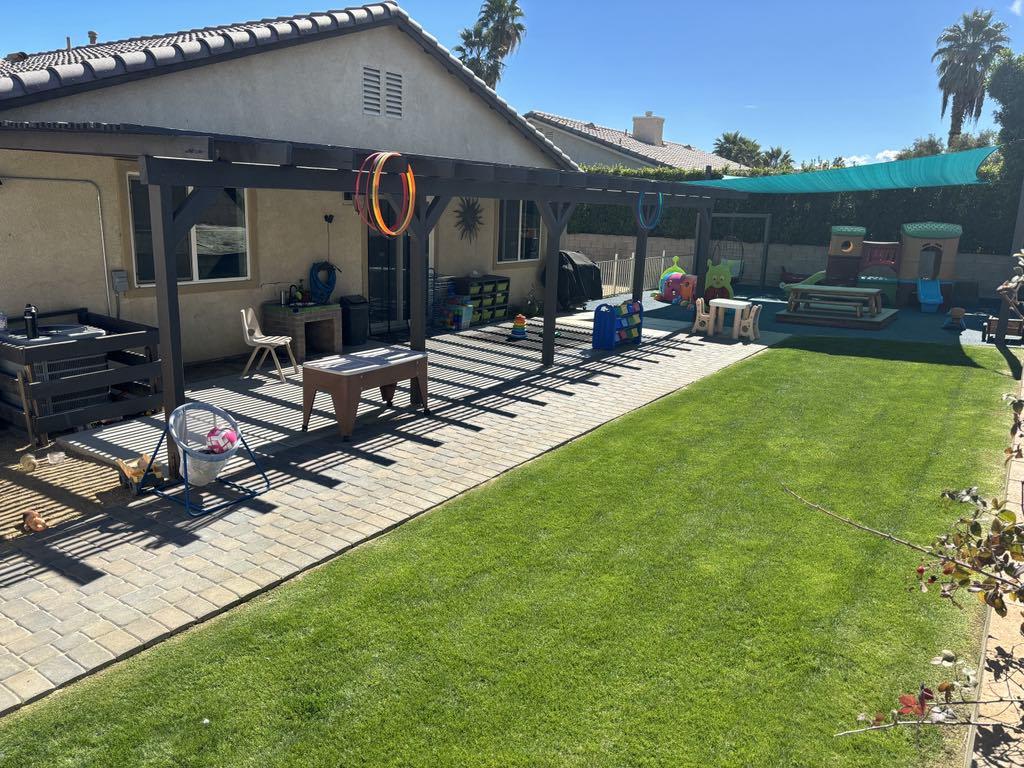
Backyard Playground & Outdoor Play is a real part of the day, and in the Coachella Valley it takes planning. From May through September we flip the schedule. Outdoor play happens early in the morning and again after four, when shade returns.
We check equipment temperature before anyone touches it. Water bottles stay filled and within reach. Shade sails and misters do heavy work out there. In the cooler months, from November through March, the yard is open far longer, because a Palm Desert winter afternoon is about as perfect as outdoor play gets anywhere in America.
Infant Daycare: For the Parents Whose Leave Is Almost Over
Handing over a baby is hard. Anyone who tells you otherwise is not being straight with you.
Infant Daycare here follows your baby, not a clock on the wall. Bottles on their schedule. Naps when they are tired. Tummy time every day. Held, talked to, sung to, and never left in a swing to pass the time.
Safe sleep is non-negotiable. Babies sleep on their backs, in their own crib, on a firm surface, with nothing loose in there. We follow current safe sleep guidance to the letter.
You get a written log every day: every bottle, every diaper, every nap, every new thing she tried. Many parents tell us that first week of daycare was survivable only because that paper existed.
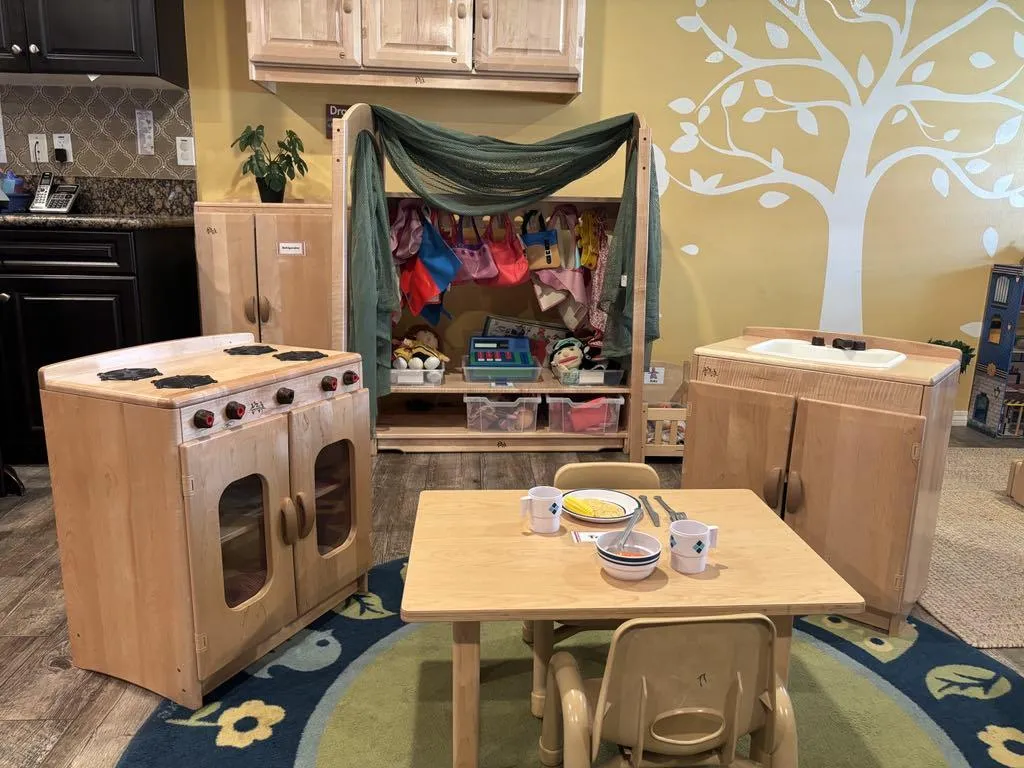
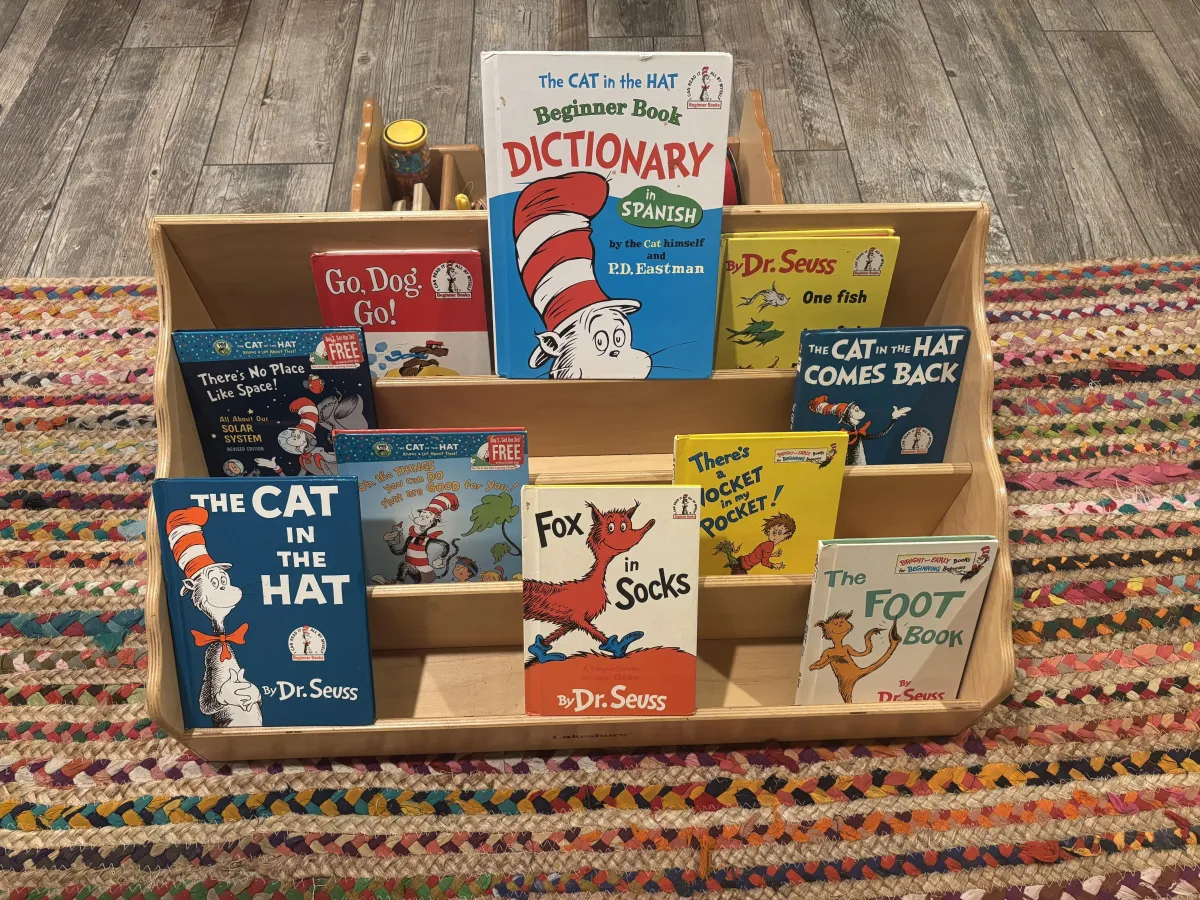
Toddler Daycare and Potty Training Support
Then they walk. And run. And say no. A lot.
Toddler Daycare is where routine starts doing real work. Toddlers who know what comes next argue less, because the world stops feeling random to them. Same order every day: eat, play, learn, outside, lunch, rest.
This is also the age when language explodes, and it is a big reason our bilingual approach matters so much at this stage.
Potty Training Support deserves its own honest paragraph. We do not push a child who is not ready, and we do not hold back a child who is. We follow what you are doing at home, use the same words you use, keep spare clothes in the cubby, and stay completely calm about accidents. Every child in history has had accidents. Not one of them remembers it. What they remember is whether the adult made them feel ashamed.
Bilingual Program (EN-ES) That Fits the Coachella Valley
More than half the households out here speak Spanish. That is not a niche. That is the valley.
Our Bilingual Program (EN-ES) runs all day, not as a once-a-week special. Songs, counting, colors, greetings, stories, and instructions come in both languages.
Two kinds of families come to us for this.
Spanish-speaking families who want their child ready for an English kindergarten classroom, without losing the language they speak with abuela on Sunday. That loss is real, it happens fast, and it hurts families for decades.
English-speaking families who want their child to grow up understanding the community they actually live in. Kids who pick up a second language before five do it almost effortlessly. After that window, it turns into homework.
Either way, your child gets both, every day, from someone who speaks both.
Full-time Childcare, Part-time Childcare, and Half-day / Full-day Programs
Schedules in this valley are strange, and any honest provider will admit it.
Season hits and hospitality hours double. Festival weeks in April turn the east valley upside down. Ag work shifts with the harvest. Snowbird season changes traffic, retail hours, and restaurant staffing from October through April. A one-size schedule does not fit anyone here.
Full-time Childcare covers the standard work week for parents doing five days, with early drop-off for the ones who commute west toward Palm Desert and Rancho Mirage.
Part-time Childcare works for parents on three or four day rotations, students at College of the Desert, nurses on twelve-hour shifts, and families who have grandma covering two days a week.
Half-day / Full-day Programs let you pick the length that fits. Some three-year-olds thrive on a half day of preschool and lunch at home. Some need the full day. Both are fine. Both are available.
Tell us your real schedule, including the messy parts. We would rather build something that works than watch a family burn out trying to fit a schedule that never fit.
Healthy Home-Cooked Meals, Made in a Real Kitchen
Ask a parent what surprised them most about our daycare and preschool services and a lot of them say the food.
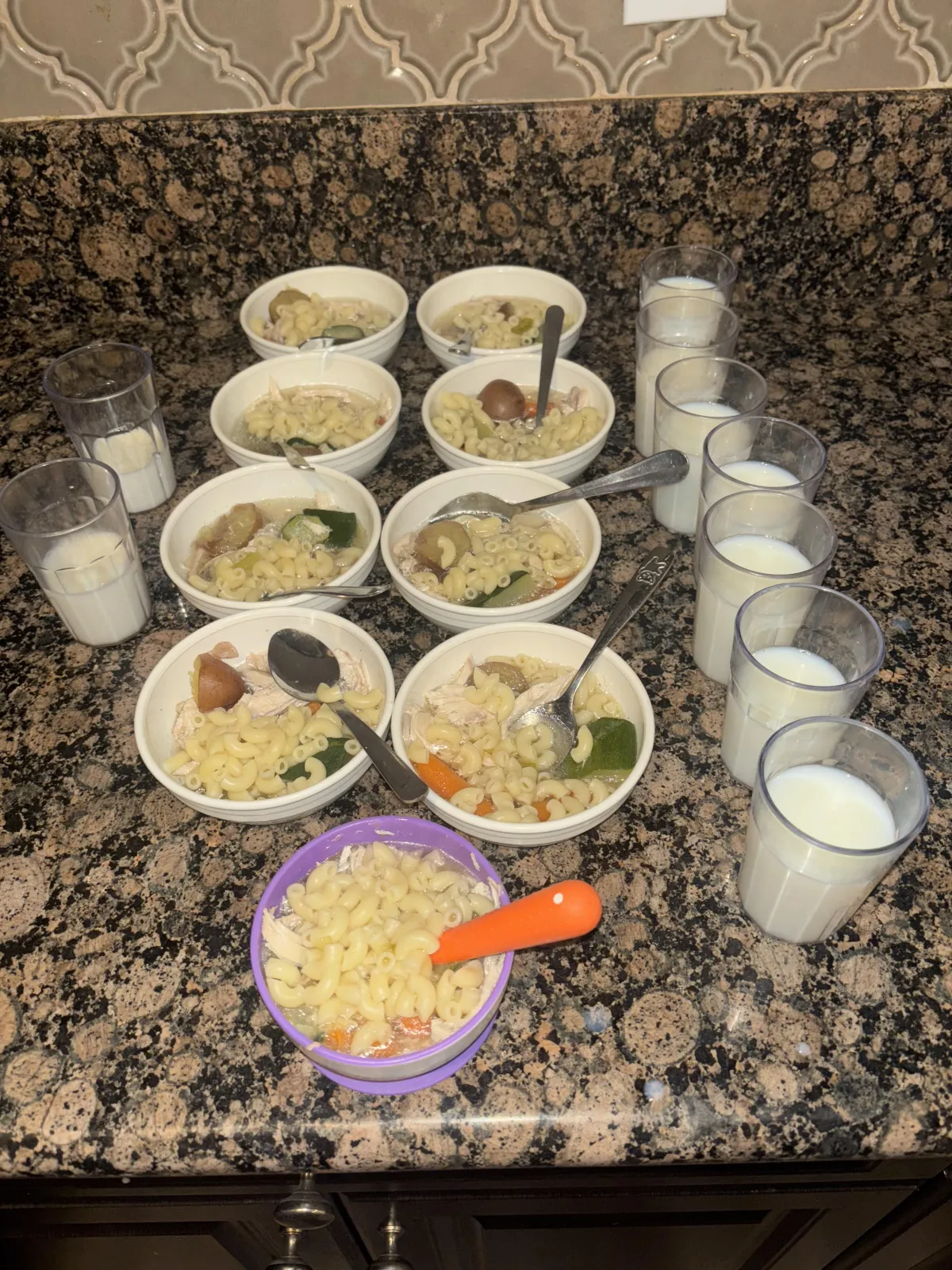
Healthy Home-Cooked Meals means exactly that. Cooked here, in the kitchen, that morning. Breakfast, lunch, and afternoon snack. Fruit, vegetables, rice, beans, chicken, tortillas, eggs, real food. Not a box, not a bag, not a tray delivered from a warehouse.
Kids eat together at the table. They pass things. They try a bite of something new because the kid next to them did. Picky eaters get more relaxed here than almost anywhere, and it is not magic. It is peer pressure pointed in a good direction.
Allergies, sensitivities, and dietary needs are handled carefully and in writing. Tell us once, we write it down, and it stays handled.
Parent Communication & Daily Reports: You Should Never Wonder
The worst part of daycare is the not knowing. You are in a meeting at two in the afternoon wondering if she cried after you left.
Parent Communication & Daily Reports exist to kill that feeling.
Every child goes home with a report: what they ate, how they slept, diapers or potty, mood, and what they learned or worked on. Photos come through during the week. Big things get a text, not a note in a folder you find at nine at night.
And at pickup, we talk. Two minutes, face to face. That conversation catches more than any app ever will.
Who These Daycare and Preschool Services Are Right For
We are a good fit if you want a small setting where your child is known by name, you value Spanish and English together, you want real food and real outdoor play, you need subsidy accepted without any awkwardness, or you are tired of feeling like a customer number.
We are probably not the right fit if you want a large campus with a uniform and an app that replaces conversation. That model exists and some families love it. We are the other thing.
How to Start: Come See the House
Reading about daycare and preschool services near Indio and Palm Desert only gets you so far. You have to stand in the room.
Call or message us and tell us your child's age and the schedule you need.
Come tour. Bring your child. Watch how the other kids act. That tells you more than any answer we could give.
Ask the hard questions. Ratios, licensing, discipline, sick policy, food, what happens if you are late. A good provider will not flinch at any of it.
Enroll and start slow. Most families do a short first day, then build up. It is easier on everybody, especially the grown-ups.
Serving Indio, Palm Desert, La Quinta, Coachella, Bermuda Dunes, Cathedral City, and the surrounding Coachella Valley.
Call Susy's Family Childcare today to check openings, or send a message and we will get back to you the same day.
Su familia es bienvenida aquí. Llámenos y con gusto le explicamos todo en español.
Our Partnerships



Have Questions We Have Answers (FAQ)
How much should daycare cost per day?
Daycare costs vary by location and setting. In 2025, the average full-time daycare cost in California ranges around $40 to $70 per day for one child. Home based daycares (like ours) can be on the lower end of the range, while larger daycare centers in cities may be on the higher end. Infant care tends to cost a bit more than care for older toddlers or preschoolers, because babies require more one-on-one attention. We keep our rates competitive and fair for local families. Tip: When comparing daycares, look at what’s included in the price (meals, diapers, hours, etc.) to make sure you’re getting the best value. Contact us for our current tuition rates we’re happy to provide details!
Is it cheaper to hire a nanny or daycare?
For one child, enrolling in daycare is usually more affordable than hiring a full-time nanny A nanny provides one-on-one care in your home, which often comes at a premium price (nannies may charge hourly and full-time nanny care can cost twice as much as daycare). For example, a national survey found the average nanny cost was about $827 per week, whereas daycare averaged around $343 per week For families with multiple children, the cost difference narrows – a nanny’s single fee might cover two kids, while you’d pay separate daycare tuition for each child. However, daycare offers added benefits like socialization with other kids and a structured program, which you wouldn’t get from a sole caregiver. In general, if you’re budget-conscious, a quality daycare will give you excellent care at a fraction of the cost of a private nanny.
What is the income limit for child care assistance in California?
California offers subsidized child care programs to help low and moderate-income families. Typically, families qualify for child care assistance if their income is below 85% of the state median income for their household size. For example, a family of three earning around $6,800 per month or less may be eligible for assistance The exact income cutoff depends on your family size (larger families have a higher income limit) and is updated periodically. If you think you might qualify, you can apply through Riverside County’s child care resource and referral program. These programs can significantly reduce your daycare costs or even provide free childcare in some cases. We can help point you in the right direction for finding information about local assistance just ask!
What is the best age to start daycare?
There’s no single “best” age that fits every child; it really depends on your family’s needs and the child’s readiness. Many children start daycare as infants (some as early as 3-6 months old) when parents return to work. Others begin at 1 to 2 years old, once they are walking and more interactive. Starting daycare young can help babies and toddlers socialize and grow comfortable with caregivers other than parents. On the other hand, if you have flexibility, some parents wait until around 18 months to 2 years when separation anxiety might ease a bit. The good news is that quality daycares can support children at any age – from infancy through preschool. We’ve seen babies thrive in our program, and we’ve helped toddlers who have never been away from mom or dad adjust and blossom. Whenever you choose to start, we will work with you to make the transition positive for your child.
What to do if I can't afford daycare?
Child care can be expensive, but there are a few strategies and resources that may help if you’re worried about cost: Look into Subsidies or Assistance: Programs exist to help families with daycare costs. For example, California has financial assistance for families under certain income levels Check with Riverside County or programs like CalWORKs Stage 3, which offer vouchers or subsidized childcare if you qualify.Consider Part-Time or Home Daycare: If full-time care five days a week is too costly, see if part-time schedules are an option. We offer flexible schedules. Even a home daycare (like Susy’s) often has lower rates than a large center, making it more affordable while still providing quality care.Nanny Share or Co-ops: Some parents team up and hire a nanny together, splitting the cost (nanny share). Others join a babysitting co-op or trade babysitting with friends/family for free. While these aren’t daycare, they can supplement or reduce the amount of paid care you need.Work Benefits & Tax Credits: Check if your employer offers a Dependent Care FSA (Flexible Spending Account) or other child care benefits – these can save you money by using pre-tax dollars. Also, when tax time comes, utilize the Child and Dependent Care Credit if you’re eligible, which can refund a portion of your daycare expenses.Talk to Us: Don’t hesitate to discuss your situation. We understand budgeting concerns, and while we must sustain our business, we truly want to help families. We might know of local scholarships, discounts, or upcoming openings in a state-funded program and can guide you to those resources. Your child deserves great care, and we’ll do what we can to make it work for you.
How much is a nanny vs daycare?
Daycare is generally much more budget-friendly than a nanny. To put it in perspective, a full-time nanny can cost anywhere from $2,500 to $4,000 a month (or more), whereas full-time daycare in our area might range roughly $800 to $1,500 a month per child. Nationally, the average nanny salary works out to about $827 per week, while daycare averages about $343 per week accoring to care.com for one child. That means a nanny could cost 2-3 times more than daycare for a single child. Of course, a nanny offers one-on-one attention and might handle household tasks, which some families are willing to pay a premium for. But if you’re looking at pure dollars and cents, daycare wins on cost. Plus, at a daycare like ours, your child gets the added developmental benefits of trained teachers, planned activities, and friends to play with – things even the best nanny might not provide in a solo setting.
What age do kids start talking?
Every child is different, but there are general milestones for speech. Most babies say their first word (like “mama” or “dada”) sometime around 12 to 18 months old By the time they reach 2 years old, many toddlers can put two words together (e.g., “more milk” or “Mommy go”). By 3 years old, children typically have a big burst in vocabulary – they can form short sentences and have words for most everyday things Remember, there’s a range of “normal” in language development. Some kids start talking earlier, some a little later. In our program, we engage children with lots of talking, singing, and reading, which helps encourage their language skills. If we ever have concerns about a child’s speech development, we’ll let you know and provide resources (like speech therapy referrals) to support them. But chances are, once your little one is immersed in a language-rich daycare environment, you’ll hear them chattering away and even singing new songs at home!
Does daycare cause attachment issues?
No – quality daycare does not harm the parent-child bond. Research and experience show that for most children, attending daycare does not disrupt their attachment to their parents The key is a loving home and responsive parenting. As long as you give your child affection and consistency at home (which we know you do!), they will maintain a secure attachment to you, even if they spend the day in child care. In fact, children are capable of forming healthy attachments to their daycare providers in addition to their parents. Think of it like having a trusted extended family. Here at Susy’s, we work hard to build a caring, stable relationship with your child, so they feel safe and loved while you’re away. Many of our graduates remain very close with their parents (of course!) and fondly remember their first friends and teachers from daycare. We’ll never try to replace a parent – rather, we become partners in caring for your child. By having that extra layer of support, your child can become even more confident in the world, knowing they have lots of people rooting for them.
Looking for child care?
If you’re looking for child care in the area, we know you have a lot of options to sift through. It can feel overwhelming trying to find the right “fit.” At Susy’s Family Childcare, we aim to make that choice easy by offering everything a parent could wantConvenience: Our location in Bermuda Dunes is central for families in Palm Desert, Indio, La Quinta, and surrounding areas. You won’t be stuck driving far out of your way each day. Many parents say our spot is perfect when they need a reliable daycare near Palm Desert or in the Coachella Valley.Trust & Reputation: We’re not a faceless franchise – we’re a beloved home daycare that has been part of the community for years. Parents often find us through word of mouth or after searching online for “the best daycares near me”. Once they visit, they see why Susy’s is so highly recommended. We have 5-star reviews on platforms like Google and Yelp, and a long track record of happy families.All-in-One Care: Because we combine daycare and preschool, you don’t have to switch providers when your baby grows into a toddler, or toddler into a preschooler. We can take care of your infant’s needs and later teach them their ABCs and 123s, all in one place. It’s a seamless experience from baby years through pre-K.Personal Connection: Perhaps most importantly, we truly care about each family. You’re not just another enrollment to us. We take time to communicate with you daily about how your child’s day went – what they learned, how they napped, the cute moment that made us smile. Building a relationship with parents is part of our job. When you join Susy’s Family Childcare, you become part of our family. We want you to feel 100% comfortable and confident that your child is loved here.In short, if you’re a working parent looking for child care you can trust, we invite you to visit Susy’s. Let us answer your questions, show you around, and see if our home-away-from-home is the right match for your little one.
How to get kids ready for child care?
Getting your child ready to start daycare or preschool is a big step! Here are some tips to make the transition smoother for both of you:
Talk About It: Begin discussing the upcoming change in simple, positive terms. For example, “Soon you’ll get to play with new friends at daycare!” Let them know what to expect – that they will play, learn, and that Mommy/Daddy will come back to pick them up.
Visit Together: If possible, bring your child for a visit or free tour of the daycare beforehand. Meeting the teacher (Susy and our staff) and seeing the new environment with you by their side can make the first drop-off much less scary. We’re happy to schedule a meet-and-greet to help your child get familiar with us
Practice Separation: In the weeks leading up, try leaving your child with a grandparent, relative, or babysitter for short periods if you haven’t before. This “practice” helps them learn that when you leave, you do come back. Start with 30 minutes or an hour and gradually extend it so they build trust that separation is safe.
Establish Routines: Young children handle change better when other parts of life stay routine. Before daycare starts, adjust their bedtime or nap schedule to match the daycare schedule. Establish a consistent morning routine (wake up, breakfast, get dressed) so the daycare days aren’t a shock. A predictable routine at home will help them adjust to the routine with us.
Comfort Items: Consider letting your child bring a familiar object from home on the first day – a favorite small stuffed animal, blanket, or family photo can provide comfort at nap time or whenever they miss home. Having a “lovey” or something that smells like home can be very soothing for a child in a new setting (we just ask that it’s something safe and not too irreplaceable in case it gets dirty).
Finally, stay positive and confident. Children take cues from parents, so if you seem comfortable and happy about daycare, they will feel more secure too. It’s normal for there to be a few tears at drop-off (sometimes from both child and parent!), but most kids adapt quickly. We send updates and photos so you can see that your little one is doing okay. Before you know it, they’ll be running into our door excited to start the day!
What are the disadvantages of a nanny?
While a nanny can provide wonderful one-on-one care in your home, there are a few potential drawbacks to consider, especially compared to a daycare setting:
Cost: A nanny is typically the most expensive childcare option. You’re essentially employing someone, which can cost significantly more than a daycare or preschool program (as discussed above). For many families, the high expense of a full-time nanny is the biggest downside.
Backup Care: When you rely on a single caregiver and they get sick, go on vacation, or have an emergency, you may suddenly be without childcare. Day cares have multiple staff and can remain open even if one teacher is out. With a nanny, you’ll need a backup plan for those situations (or you might have to miss work).
Less Peer Interaction: At home with a nanny, your child won’t have the built-in opportunity to play and learn with other children. They might miss out on those early socialization experiences that daycares and preschools naturally provide. Things like learning to share, taking turns, and being part of a group are big perks of group care.
Limited Oversight/Structure: A good nanny will engage your child in activities, but nannies are not regulated the way daycares are. Licensed daycares follow state standards for safety, caregiver training, and curriculum. Nannies don’t have a formal curriculum unless you arrange one, and there’s no outside monitoring. In a daycare, you know the environment is set up for kids and staff are trained. With a nanny, especially if they’re alone in your home, you’ll need to trust their initiative and maybe even install cameras if you want oversight.
Of course, every family’s needs are different. Some families prefer a nanny for the personalized attention or flexible help with household tasks. But if the above concerns worry you, a daycare/preschool like Susy’s can be a better choice – offering reliable, enriched care in a social setting (and usually at a lower cost).
What is the best year to start preschool?
Most children start preschool in the year they are 3 or 4 years old. In fact, the typical preschool age range is 3 to 5 years Starting at 3 years old is common – many preschools have a “3-year-old program.” This gives kids two years of preschool (at age 3 and age 4) before kindergarten, which can be very beneficial for their social and academic development. By 3, many children are potty-trained or close to it, and they’re eager to play with peers, making it a great time to begin a more structured learning setting. Some families wait until 4 years old (the Pre-K year) to start, especially if the child has been home or in daycare previously. Starting at 4 can work well if you prefer just one year of preschool experience before kindergarten. Bottom line: The best year to start is when your child is ready and excited to engage with the world around them in a classroom setting. We accept children into our preschool program around age 2½ to 3. If you’re unsure if your little one is ready, we can gladly discuss and even arrange a trial day to see how they do
What is the best age for kids to go to preschool?
Generally, ages 3 to 4 are considered the ideal time to start preschool according to parents.com. At age 3, children are typically developing greater independence, curiosity, and social skills, which helps them benefit from a preschool environment. They can follow simple instructions, enjoy group story time, and play cooperatively (well, as much as toddlers can!). Age 4 is also a prime preschool age – 4-year-olds are gearing up for kindergarten, and a good Pre-K program can boost their readiness in recognizing letters, numbers, and making friends. Some children even start at 2½ if they’re potty-trained and ready, while others might not begin until age 4 if they needed a bit more time at home. Every child is different. If your 2-year-old is very social and seems bored at home, they might thrive starting preschool early. If your 3-year-old still takes long naps and is shy, you might do a shorter schedule to start. At Susy’s, we offer a lot of flexibility. We have some toddlers join our mixed-age group at 2½ on a part-time basis to ease in, and we have 4-year-olds attending full-time preparing for kindergarten. We’ll help you figure out what’s best for your child’s stage and personality.
How much does preschool cost? (2025 Prices)
The cost of preschool in 2025 can vary depending on location, program quality, and schedule. On average, full-time preschool programs (5 days a week) in California range from about $400 to $1,300 per month per child. That typically breaks down to roughly $20 to $65 per day Part-time preschool (for example, 2-3 days a week or half-days) would cost less than that range. Factors that influence the price include the teacher-to-child ratio, facilities, included meals or supplies, and whether it’s a private preschool or state-funded program. Here at Susy’s Family Childcare, we aim to keep tuition affordable while still providing excellent staff and curriculum. As a home-based preschool, our overhead is lower than a big center, and we pass those savings on to our parents. We’re transparent about our pricing – feel free to reach out, and we can discuss the specific costs for your preferred schedule and see what works for your budget. Also, remember to explore if you qualify for any preschool tuition assistance (California has some programs for 4-year-old pre-K funding, for example). We want high-quality preschool to be accessible to as many families as possible.
Is preschool better than staying at home?
A high-quality preschool provides experiences that can be very beneficial compared to staying at home, though “better” can depend on individual circumstances. In general, children who attend preschool tend to develop strong social skills and vocabulary by interacting with peers and teacherscremedelacreme.com. In a good preschool, kids follow a routine, participate in group activities, and are exposed to early literacy and math concepts through play – these things can give them a head start in learning and adjusting to a school environment. At home, a child might get more one-on-one adult attention and the comfort of a familiar setting, but they might not encounter as many new ideas or the same level of social interaction. We like to say preschool isn’t just about ABCs and 123s; it’s about learning to share, waiting your turn, raising your hand, and being part of a community. Those are skills that are hard to replicate in a home setting. That said, a loving home with attentive parents is also a great environment for a young child. Many families do a combination – time at preschool and quality time at home. In our experience, children who have some preschool experience adjust more quickly to kindergarten. They’re used to being around other kids, listening to adults other than Mom or Dad, and they often show more independence in things like packing their backpack or following instructions. But if staying home is your only option or choice, you can still nurture your child’s development by creating playdates, visiting libraries or parks, and doing learning activities together. It’s not “preschool or nothing.” Every bit of engagement helps. Overall, though, we believe a good preschool program (even part-time) offers wonderful advantages that set the stage for lifelong learning and social confidence.
Is private preschool worth it?
Private preschool (which includes most home daycares and independent preschools like ours) can absolutely be worth it, if it aligns with your family’s needs and you can budget for it. Here are a few reasons parents find private preschool valuable:
Smaller Class Sizes: Private preschools often have fewer children per teacher, meaning more individualized attention for your child. If you want your child in a calmer environment where teachers can really focus on each student, private programs shine here.
Enriched Curriculum: Many private preschools offer specialized curriculum or teaching philosophies (Montessori, play-based, bilingual, faith-based, etc.) that you might not find in a public setting. At Susy’s, for instance, we incorporate bilingual learning and personal lesson plans – flexibility that is a perk of being a private program.
Parent Communication: In our private program, we build close relationships with families. We send photos, updates, and have an open-door policy for communication. You might find a more personal touch and responsiveness in a private preschool compared to a larger public program.
Flexible Schedules: Public or state-run preschool programs (like state pre-K) may have limited hours or follow a strict school district calendar. Private preschools often offer full-day, year-round care, which is a huge benefit for working parents. For example, we are open most of the year and can provide care beyond a short 3-hour class. This convenience can be worth it by itself.
Of course, the main downside of private preschool is cost you have to pay tuition, whereas public programs might be free or low-cost if you qualify. The question of “worth it” comes down to whether the benefits match what you want for your child and whether the costs are manageable. Many parents who choose private preschool (and invest in those early years) see their children grow in confidence, skills, and love of learning, which they feel is priceless. If you’re on the fence, we suggest touring both private and public options in your area to compare. Look at class size, teacher qualifications, facilities, and gut feeling. Often, parents tell us that after visiting, they just knew Susy’s Family Childcare was the right place because of the warmth and quality they felt. That kind of assurance can make a private preschool worth every penny.
How many hours of preschool for a 3-year-old?
For a 3-year-old, many experts suggest that a half-day preschool program is a great starting point. That’s usually about 3 to 4 hours per day, either in the morning or afternoon. At 3, children have a lot of energy and enthusiasm, but they can also get tired or overstimulated after a few hours of structured activity. A half-day gives them the preschool experience (circle time, playground, art, etc.) and then they can have lunch and nap at home (or in a full-day program, they’d nap at school). However, every child and family situation is different. Some 3-year-olds in our care stay full-day (6-8 hours) because their parents work full-time, and they adjust just fine. We include a nap/rest period after lunch, which helps them recharge. The key is consistency and quality of the time spent. In a full-day program, we make sure there’s a good balance – active play, quiet story time, learning activities, meals, and naps, so it’s not go-go-go all day. If you have the flexibility, you might start your 3-year-old at 2 or 3 days a week, half-day, and then increase as they get closer to 4. This gradual introduction can help them build stamina for a school schedule. On the other hand, if you need full-time care, don’t worry – 3-year-olds are adaptable. With a loving environment and routine (which we provide), they can thrive even in a longer day. We will work with you to monitor your child’s adjustment. If we see they’re getting too tired or cranky with a long day, we’ll let you know and can strategize (maybe extra quiet time or a shorter day if possible). Our goal is to ensure your 3-year-old is happy and flourishing, whether they’re here for a morning preschool class or from breakfast to dinnertime.
Is pre-K the same as preschool?
Pre-K (short for pre-kindergarten) is similar to preschool, but there’s a slight distinction. Both are early childhood education programs prior to kindergarten, but **Pre-K usually refers to the year before kindergarten, typically for 4-year-olds. It often has a curriculum that is a bit more focused on kindergarten readiness skills – think of things like learning to hold a pencil correctly, recognizing letters and numbers, basic classroom routines, etc. Preschool is a broader term that can refer to any program for 3 and 4-year-olds (sometimes even 2-year-olds). In essence, Pre-K is a type of preschool, often a more advanced class for older preschoolers. For example, at Susy’s Family Childcare, we have a mixed-age approach, but we do tailor activities for our “pre-K” kids (older 4s) to prepare them for the transition to elementary school. Some school districts offer specific Pre-K classes that are separate from general preschool, often targeting kids who are 4 turning 5 and will enroll in kindergarten the next year. These might be called Transitional Kindergarten (TK) or Pre-K. Meanwhile, private providers might just group 3s and 4s together as “preschool.” In short: All Pre-K is preschool, but not all preschool is Pre-K. Pre-K is typically the last stop in preschool before kindergarten. No matter what you call it, the goal is similar: to help children develop the skills and confidence needed for the big leap into kindergarten.
What is the difference between preschool and daycare?
The terms preschool and daycare are sometimes used interchangeably, but they do have different connotations:
Daycare (Childcare): The primary focus of daycare is to provide care and supervision for children while parents work. Daycares often accept a wide age range — from infants as young as 6 weeks up to preschoolers or even school-age kids for after-school care. Daycares typically cover longer hours (e.g., 7 AM to 6 PM) and operate year-round. The daily activities in daycare can include learning through play, meals, naps, and general playtime. While children certainly learn and reach developmental milestones in daycare, the structure might be more about flexibility and care than a strict academic curriculum.
Preschool: Preschool usually refers to an educational program for 3-5-year-olds that focuses on early learning skills and socialization in a group setting. Preschools often have more of a school-like schedule (for example, 8 AM to noon, following a school district calendar with summers off, though some are full-day). The term “preschool” emphasizes school readiness – children participate in planned activities to develop pre-reading, pre-math, and social skills (like learning shapes, colors, how to sit in circle time, how to share, etc.). Preschools might have teachers with specific early childhood education credentials and a set curriculum or philosophy guiding the day.
In practice, there’s a lot of overlap. Many daycares incorporate a preschool curriculum, especially for the 3-5-year-olds in their care (we certainly do at Susy’s!). And many preschools also take on the role of daycare by offering extended hours or wrap-around care. At Susy’s Family Childcare, we blend the two: we provide the nurturing care your child needs (diaper changes, hugs, free play, lunch and nap coverage for working parents) and we provide the structured preschool learning that prepares them for kindergarten. So your child doesn’t miss out on anything. The difference really comes down to emphasis and timing: daycare = all-day care, catering to parents’ work schedules, preschool = focused learning program, usually shorter day. We’re proud to offer both in one place – a home daycare that is also an enriching preschool program.
Is private preschool better than public preschool?
Private vs. public preschool – each has its advantages, and “better” will depend on what you value for your child. In a private preschool (like Susy’s or other independent centers and home daycares), you often find:
Smaller classes: More individualized attention because private programs control their enrollment and maintain low child-to-teacher ratios.
Specialized curriculum: Flexibility to use teaching methods or curricula that might not be in public programs (Montessori materials, religious education, language immersion, etc., depending on the school).
Extended hours: Private preschools are often full-day and year-round to meet working parents’ needs. Public preschools might be partial-day or school-year only.
Parent involvement & community: Private preschools build their own community culture; many families love the close-knit, family-like atmosphere (which we definitely foster at Susy’s).
In a public preschool, which could be a state-funded Pre-K or a program in a public elementary school, you typically get:
Free or low cost: Huge benefit – these programs are funded by the government, so eligible families might attend for free or a fraction of the cost of private tuition.
Certified teachers: Public programs often require teachers to have specific credentials or degrees, and they follow state early education standards.
Resources for special needs: Public schools can provide services like speech therapy, etc., as part of their program if a child qualifies, thanks to federal and state support.
Diversity: Public preschools usually draw a diverse group of children from the community, which can be a plus for social learning and inclusion.
Neither private nor public guarantees quality – there are excellent and not-so-excellent examples of each. Private preschools can sometimes have more innovative approaches and extra amenities (but at a cost), while public preschools ensure access and have oversight but might be limited in flexibility (and spots can be limited, too, often they prioritize lower-income or special needs first).
If you’re considering this choice, think about what matters most: Is it the cost? The hours? The educational approach? The environment? For instance, if you need full-day care, a private preschool will likely serve you better. If budget is a concern and you qualify for a great free pre-K program, that could be a wonderful opportunity (perhaps supplemented by daycare for wrap-around hours). Some families even do a mix: using a public preschool part of the day and a private daycare for the rest.
At the end of the day, the best preschool is one where your child is safe, loved, and learning, whether it’s public or private. We encourage you to visit any program you consider and trust your instincts. As a private preschool, we welcome anyone to tour our facility, meet our teachers, and see our curriculum. We’re confident that the quality of care and education we provide stacks up against any program out there.
What is the difference between private and public schooling?
This is a broader question that goes beyond preschool into school-age years, but it’s important as you think long term. Public schools are funded by the government (through taxes) and are free to attend for all students in the district. Private schools rely on tuition payments and private funding (like donations or religious organization support) and are not free. Here are a few key differences:
Curriculum and Standards: Public schools must follow state-mandated curricula and standards (for example, Common Core for math/language arts in California). Private schools have more leeway to design their own curriculum or educational approach, as long as they still meet basic educational requirements. This means a private school might offer unique programs (like advanced arts, different language offerings, or alternative teaching methods) that public schools might not.
Class Size: Public school class sizes can vary widely, but especially in California, they might be larger due to budget constraints – it’s not uncommon to see 25+ kids in a class in elementary school. Private schools often tout smaller class sizes (maybe 10-15 students per teacher), allowing more individualized attention.
Teachers: Public school teachers are state-certified and generally unionized; they often have at least a bachelor’s degree plus teaching credentials, and many have master’s degrees. Private school teachers might not need state certification (depending on the school), and requirements can vary – some private schools hire teachers with advanced subject knowledge even if they don’t have a teaching credential. Pay can be lower in private schools, but they might offer other benefits or a different work environment.
Funding and Resources: Public schools get funding based on the state and local budgets, which can mean great resources in some communities and tighter resources in others. Private schools depend on tuition and fundraising; a well-funded private school might have cutting-edge facilities or technology, whereas a smaller one might operate on a shoestring.
Student Body: Public schools serve all students in their area (and must accommodate special education needs, language learners, etc.), so they tend to be more diverse in terms of background and abilities. Private schools often have an application process, and some may be selective (academically or based on other criteria). Some private schools are religious (parochial schools) and incorporate faith into their program, something public schools won’t do.
Accountability: Public schools are subject to state testing and public accountability measures. Private schools are accountable to parents (and accreditation bodies, if accredited). If a private school isn’t meeting expectations, parents can “vote with their feet” and leave, since attendance is by choice.
Neither is inherently “better” – it really depends on the specific schools available to you and your child’s needs. Some public schools are fantastic and offer special magnet programs, and some private schools provide specialized environments that help certain kids thrive (and vice versa). One thing to note is that starting in preschool with a private program like ours does not commit you to private K-12 schooling. Many children from Susy’s Family Childcare go on to attend excellent public elementary schools in our area; others might choose charter or private schools later. We give them a strong foundation so they can succeed anywhere. We’ll support whatever path your family chooses, and we’re happy to share our knowledge of local schools when the time comes.
What ages do you accept for daycare and preschool services near Indio and Palm Desert?
We care for infants through Transitional Kindergarten age, roughly 6 weeks through 5 years. Infant daycare, toddler daycare, Pre-K classes, and TK program support are all offered in one home, so siblings can stay together.
Do you accept RCOE, CalWORKs, or GAIN subsidized care?
Yes. We accept RCOE / CalWORKs / GAIN subsidized care and help families with the paperwork the county requires. If you are not sure whether you qualify, ask us and we will point you in the right direction.
Is the program really bilingual?
Yes. Our bilingual program (EN-ES) runs throughout the day, not as an add-on class. Songs, stories, instructions, and counting happen in both English and Spanish.
Can my child go part-time instead of full-time?
Yes. We offer full-time childcare, part-time childcare, and half-day / full-day programs. Tell us your actual schedule and we will find the arrangement that fits.
How do you handle the summer heat for outdoor play?
We move outdoor play to early morning and late afternoon from roughly May through September, check surface temperatures before use, and keep shade, misters, and water available. Our backyard playground is used year-round, just on a desert-smart schedule.
How will I know what my child did all day?
Every family gets daily reports covering food, naps, diapers or potty, mood, and learning, plus photos during the week and a face-to-face update at pickup.
Building Confidence , Celebrating Growth: Join Us for a Tour
Safe, Nurturing, and Reliable: Feel at ease knowing your child is in a secure and loving environment where they can learn and grow every day.
Customized Learning: We assess each child’s developmental stage and create an individualized lesson plan focusing on the skills they need most.
You deserve a partner in your child’s growth who truly understands their unique needs and helps them flourish.
Milestone Celebrations: Create small recognition events for achievements like potty training success, first words, or academic progress to boost children’s confidence and involve parents in the celebration.

Trusted By Google & Yelp. See 5 Star Reviews
We seek to provide safe, high quality child care which includes opportunities for all our children to grow and mature, at their own developmental level.
Follow Us:
Susy's Family Child Care
LIC # 334843309
41755 Brownstown Dr, Bermuda Dunes, CA92203
Hours: Monday All rights reserved - Friday 8:00 A.M. - 4:00 P.M.
Facebook
Youtube
Instagram